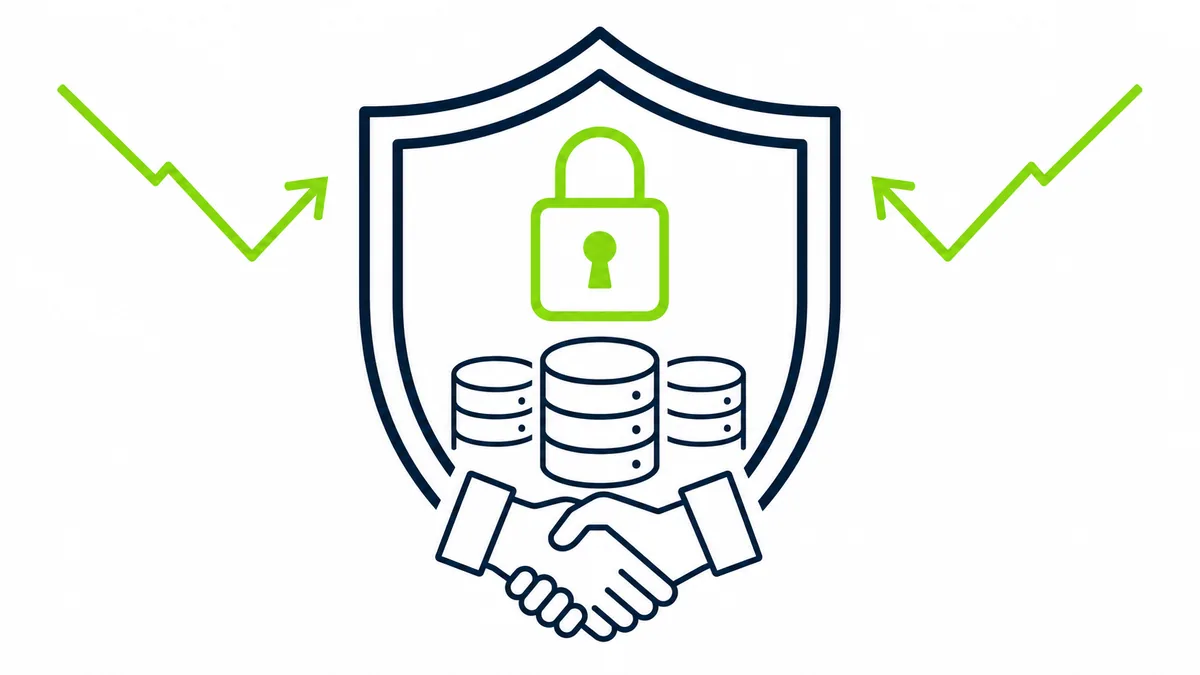
How do I know an AI tool won't put our partners' data or our program at risk?
AI tool risk depends on vendor security, controls, and data handling. Review contracts, audit processes, and seek independent certifications for assurance.
Most PE portfolios already have AI exposure — it arrived through portco tool subscriptions that bypassed centralized review
You cannot assume your partners’ data is safe. AI tool risk affects their data too. If you feel stretched, you are not alone. 49% of employees admitted using AI tools their employer had not sanctioned, in a BlackFog survey of 2,000 US and UK workers (Sapio Research, Nov 2025). That risks partner and program data. The oversight gap is a current problem.
AI risk enters your portfolio quietly. Program managers and portco teams use off-the-shelf tools. These tools provide quick wins. They include advanced artificial intelligence technologies. Machine learning is a key technology included. These tools rarely go through centralized security review. This increases threat to sensitive data.
Partners have entrusted sensitive data to your organization. 73% of US companies had adopted AI in at least some areas of their business, per PwC's 2023 Emerging Technology Survey. Your partner ecosystem fits this trend. It frequently handles sensitive business information.
AI-related risks are real. AI tools expand your breach surface. The global average cost of a data breach reached $4.45 million in 2023, per IBM's Cost of a Data Breach Report. This shows the importance of strong data security.
Shadow AI is the fastest-growing blind spot. Privacy security and data privacy are top concerns. Compliance teams prioritize these issues. Discovery of unauthorized AI is now a legal requirement. This applies to high-risk enterprises under the EU AI Act. See EU AI Act. Few portfolios maintain a true AI system inventory or conduct ongoing risk assessment. This is part of their risk management strategy. See EU AI Act.
Centralized oversight is not just about legality. It is about regulatory compliance. It is about transparency and explainability. Transparency and explainability are vital in privacy security programs. The NIST AI Risk Management Framework calls this “shared responsibility.” See NIST. Without shared responsibility, vendors may not perceive your risks or your partners’ risks. This leaves your compliance exposed. It increases vulnerability to sensitive data leaks. Security leaders confirm this. Confidence that data will not be exposed is a top barrier. Data misuse is also a top trust barrier. See ISO 42001.
Immediate red flags for your review:
- Map inventory of AI tools in your program
- Use AI by portcos without central signoff
- Discover undocumented AI lacking process
- Share partner data with AI tools lacking controls
- Ensure vendor transparency on data use or model training
Spot these conditions now. Otherwise, you inherit program risk and regulator attention.
| Risk Factor | If Centralized Oversight Exists | If Shadow AI Persists |
|---|---|---|
| Data Inventory | Complete and accurate | Unknown, fragmented |
| Partner Data Protections | Policy-driven and auditable | Uncontrolled, vulnerable to leaks |
| Vendor Explainability | High (contractual and technical) | Absent |
| Legal and Compliance Risk | Tracked and documented | Unmitigated, non-compliant |
| Audit Readiness | Evidence ready | No records, major gaps |
Do not defer to annual reviews. AI risk does not wait.
Vendor contracts, not the AI model itself, are where partner data protection is either locked in or left open
The main risk to partner data is not safety. An AI tool is not "safe" by default. The key factor is what your contract allows. You control terms with the vendor, not how the model works. Tools must be controlled by agreements addressing regulatory compliance. These agreements should include audit rights to support evidence collection. They should also show data security is maintained.
Security leaders say their biggest worry is keeping data safe. Data should not be used or shared without clear permission. See ISO 42001. If not specified, vendors may use partner data to improve products. See NIST. Carefully written vendor contracts are necessary to ensure compliance. They protect sensitive data used in machine learning systems. Vendor contracts are where you have influence. Compliance tools concentrate controls here.
Build these protections into every contract:
- Data ownership and deletion rights
- Restrictions against AI training on partner data
- Clear incident and breach notification terms
- Right to audit and see model logs
Run a basic governance check with these questions:
- Require reporting of unauthorized use in every vendor contract
- Forbid partner data use for model training in writing
- Enumerate all AI tools and map each vendor as the EU AI Act demands EU AI Act
- Provide audit logs to prove compliance for programs and partners at any moment ISO 42001
A trusted compliance partner can strengthen these efforts. They help compliance teams navigate complex requirements. They conduct risk assessment. They select the most effective GRC platform supporting program-wide oversight.
Statistics prove the gap:
-
49% admit to using unsanctioned AI tools (BlackFog)
-
Global average data breach cost of $4.45 million in 2023 (IBM)
-
Contracts requiring data mapping to satisfy EU rules EU AI Act
-
Rare recognition of the same risks by AI vendors as partner program owners NIST
-
Contract-backed security automation pays off: organizations making extensive use of security AI and automation saw breach costs average $1.76 million lower and breach lifecycles 108 days shorter (IBM)
Compare:
| Consumer AI App | AI Tool with Enforced Contract | |
|---|---|---|
| Partner Data Use | May retain, train, or repurpose data without notice | Explicit bans on non-consensual data use |
| Incident Response | Limited or no notification | Written escalation and reporting terms |
| Audit Logs | Rarely available | Mandatory, contract-defined auditability |
| Compliance Alignment | Ad hoc, if at all | Bound to your defined risk and compliance needs |
Focus on contract clauses covering risk and compliance. Insist on regular monitoring. Most MDs cannot reverse-engineer a model but can review, negotiate, and enforce terms. Place emphasis here, not on claims of “enterprise-grade” code. If you need help benchmarking, talk to a partner familiar with operationalized risk.
Partner data incidents don't stay at the portco level — they surface in LP conversations and compress exit timelines
Partner data risk is not a technicality. Every AI exposure involving partner data reaches LP conversations. Incidents can compress exit timelines and question board oversight.
Partner data, once mishandled, becomes uncontained. AI tools expand your breach surface. The global average cost of a data breach reached $4.45 million in 2023, per IBM's Cost of a Data Breach Report.
Shadow AI use at portco level is widespread. 49% of employees admitted using AI tools their employer had not sanctioned, in a BlackFog survey of 2,000 US and UK workers (Sapio Research, Nov 2025). One person's unsanctioned upload can become an incident, especially with sensitive data.
73% of US companies had adopted AI in at least some areas of their business, per PwC's 2023 Emerging Technology Survey. These tools are in daily workflows. This compounds demands on data privacy and risk assessment processes. New tools hit partner programs fast, multiplying risks.
Regulators are tuning in. The EU AI Act requires inventory and classification of every AI tool, including shadow AI. Document every data flow. See EU AI Act. Gaps create audit pain points, sometimes blocking exits. Security teams list partner and customer data misuse as their biggest AI trust concern. See ISO 42001. Regulatory compliance is central to any data security strategy. Your LPs and boards share this concern.
Without continuous monitoring, exposure lingers. Organizations making extensive use of security AI and automation saw breach costs average $1.76 million lower and breach lifecycles 108 days shorter, per IBM. PE teams can cut this risk. They help your team catalog every partner-facing AI, enforce strict access, block unsanctioned uploads EU AI Act. A grc platform streamlines these processes for compliance teams, provides real-time evidence collection, supports documentation to ensure compliance.
Typical Partnership Data Risks by Governance Maturity
| Governance Level | Key Gaps | Resulting Risks |
|---|---|---|
| "Hands-off" (no inventory) | Unknown tools, shadow AI, no data map | Unseen leaks, policy breach |
| "Ad hoc" (spot checks only) | Partial inventory, some access control | Missed shadow AI, audit delays |
| "Proactive" (full inventory + logs) | Mapped tools, enforced access, audit-ready logs | Controlled risk, faster exit |
Failure patterns compress exit multiples:
- Missing AI tool inventory and risk mapping
- Failing to detect shadow AI
- Gaps in continuous monitoring and audit traceability
- Misalignment on partner data definitions and risk appetite
- Over-reliance on automation, underuse of human review
Program recommendations:
- Build a living inventory of all partner-facing AI tools
- Map and review all partner data flows quarterly
- Enforce single sign-on and strict partner access controls
- Use continuous compliance monitoring for real-time detection
- Share incident protocols with partners and boards for fast response
Every governance miss damages reputation. Help your team prevent data gaps. They sideline board narrative and shrink exit premium.
Reviewing an AI vendor's privacy policy doesn't protect partner data — the data processing agreement and continuous control monitoring posture do
A privacy policy states what a vendor claims but is not enforceable. Bind vendors to a data processing agreement covering your security requirements. Use robust compliance tools requiring ongoing evidence collection to monitor data privacy controls.
Verify these controls in every AI vendor review:
- Restrict partner data use for model training by contract.
- Store partner data in segmented storage, not pooled with others.
- Audit all access and exports with human review.
73% of US companies had adopted AI in at least some areas of their business, per PwC's 2023 Emerging Technology Survey. Only formal data controls reduce breach risk, not mere policy language. The global average cost of a data breach reached $4.45 million in 2023, per IBM's Cost of a Data Breach Report. Human oversight is essential; automation must not replace documented review [Deloitte Canada].
You must demand:
- A signed data processing agreement (DPA) with your security language
- Built-in continuous control monitoring of data access, flows, and exports
Do not stop at onboarding. Risk evolves. AI vendors must allow continuous, automated surveillance. You see every access, permission, and policy exception in real time. Annual recertifications or static reports do not reduce exposure. Your tech must keep logging and flagging issues daily [Sprinto; Drata].
Single sign-on, audit logging, and granular permissions signal good posture. Without these, shadow AI use rises. 49% admit to using unsanctioned AI tools (BlackFog). You cannot claim compliance without inventorying tools EU AI Act. A modern GRC platform is essential. It supports privacy security and audit readiness.
Quick vendor screen:
| Question | Yes ☐ | No ☐ |
|---|---|---|
| Signed DPA (with your addendum) | ☐ | ☐ |
| Continuous control monitoring dashboard | ☐ | ☐ |
| Daily audit log access | ☐ | ☐ |
| Segregated partner data, not used for training | ☐ | ☐ |
| Inventory and data flow mapping (inc. shadow AI) | ☐ | ☐ |
Require these checks of all who procure or configure AI. Run scans quarterly, not only on new tools.
You don’t need technical expertise. You need enforceable contracts and consistent security evidence. That earns a defensible answer to: “What have you done to avoid the next breach?”
A single AI data handling policy scales across portcos only if it specifies model training opt-outs, prompt retention limits, and subprocessor disclosure as non-negotiable terms
Avoid risky tool-by-tool audits. A single data handling policy works across portcos if enforcement centers on exact AI requirements covering data privacy and regulatory compliance.
Generic privacy policies fail adherence to regulatory and board expectations.
The EU AI Act requires real-time inventory, including all AI tools, vendors, use cases, and data flows. EU AI Act
49% of employees admitted using AI tools their employer had not sanctioned, in a BlackFog survey of 2,000 US and UK workers (Sapio Research, Nov 2025). Standard privacy notices miss AI-specific sensitive data risks.
Your policy must demand at least:
- Opt-out documentation from model training with partner, customer, or PII data
- Hard retention windows for prompts and outputs, logged and auditable
- Full disclosure of subprocessors, access points, and external API data paths per tool
Audit teams and investors want proof your policy addresses AI risks specifically, not legacy risks. Security executives’ main concern is unauthorized data use, exposure, and model training ISO 42001. The global average cost of a data breach reached $4.45 million in 2023, per IBM's Cost of a Data Breach Report. Evidence collection and continuous compliance monitoring are critical, supported by a dedicated GRC platform. This helps compliance teams ensure compliance and prevent exposure of sensitive business data.
Adoption must require:
- Identifying and shutting down shadow AI before onboarding a platform
- Reviewing logged data flows and prompt retention compliance periodically
- Automatically checking new subprocessors or unapproved integrations
Continuous monitoring pays off. Organizations making extensive use of security AI and automation saw breach costs average $1.76 million lower and breach lifecycles 108 days shorter, per IBM. Audit-ready compliance platforms provide ongoing evidence trails covering each portco [Sprinto; Drata]. Mapping vendors and subprocessors satisfies ISO 42001; mapping model training status supports NIST’s AI Risk Management Framework NIST.
One-policy approach without these controls leaves blind spots in partner and program data protection, undermining risk management.
If your policy specifies opt-outs, short retention, and subprocessor transparency, you can check any AI tool at any portco with the same test. This yields near-instant answers for board and partner questions and reduces redundant audits.
For templates, audit checklists, or help aligning portco controls with regulatory adherence and exit readiness, contact Cortado Group.
Recognize the risk. Put every AI tool through a vetted, repeatable process. Secure your partners' data. Insist on a clear, documented compliance checklist. Push your team to assess vendor transparency and security history. Stay ahead of data breaches costing $4.45 million on average, per IBM's Cost of a Data Breach Report. The burden of proof sits with you. You don’t have to go it alone. Partner with Cortado Group, a trusted GTM extension.
Frequently Asked Questions
Q: How does AI risk enter a PE portfolio or partner program? AI risk enters through portco teams using off-the-shelf AI tools without centralized security review. Almost half use unsanctioned tools, risking exposure of partner and program data, including sensitive business and sensitive data types. Shadow AI is the fastest-growing blind spot, highlighting the critical role of risk assessment.
Q: Why is vendor contracting more important than the AI model itself for partner data protection? Protection depends on vendor contracts, not whether an AI tool is "safe." You control data ownership, usage restrictions, incident notification, and audit rights. Without strong contracts, vendors may use partner data for model training or product improvement without your knowledge, increasing data privacy and data security risks, challenging regulatory compliance.
Common gaps include missing AI tool inventory, failure to detect/manage shadow AI, and absent continuous monitoring and audit logging. These cause data leaks, delayed audits, unmitigated regulatory risk, and non-compliance with the EU AI Act, which requires real-time AI inventories and data flow documentation, especially for handling sensitive data under GRC platform metrics.
Q: Is reviewing a vendor’s privacy policy enough to protect partner data? No. You must bind vendors to a data processing agreement covering security requirements, require continuous control monitoring of data access, logs, and exports. Only enforceable agreements and ongoing controls reduce risk, aid evidence collection, and support compliance in meeting privacy security goals.
Q: How can a single AI data handling policy protect all portcos in a program? A single policy works if it specifies non-negotiable requirements: opt-out from model training, prompt retention limits, and full subprocessor disclosure. It supports continuous monitoring, real-time inventory, and periodic reviews through compliance tools. Without these, shadow AI risks partner data and creates undocumented flows risking sensitive business.
Build a living inventory of all partner-facing AI tools, map and review data flows quarterly, enforce strict partner access controls, apply continuous compliance monitoring, forbid data training in vendor contracts, require full audit trails, and rely on a GRC platform for ongoing risk assessment. These measures prevent incidents and build board and partner confidence that risks are managed.
See how Channel Partner Enablement OS turns this into a guided workflow your reps actually use.
Sign in to your workspace →See where your own channel program stands. Take our channel assessment: 13 questions, four scores (Foundational, Enablement, Revenue Ops & Attribution, Management), one read on where the leak actually is.
Take our channel assessment →